What Is Physical Therapy and How Does It Help Young Children with Disabilities Thrive?
Fall in Rhode Island gets kids moving. Leaf piles, pumpkin patches, a first trick-or-treat walk down the block. For a toddler with a developmental delay, each of those moments asks a lot: balance on bumpy ground, a steady step up a neighbor’s porch stairs, the strength to climb out of a leaf pile.
October is National Physical Therapy Month. It’s also Down Syndrome Awareness Month, and World Cerebral Palsy Day falls on October 6. That makes it a great time to finish our series on the three therapies at the heart of Trudeau’s Children’s Services, following our earlier looks at occupational and speech-language therapy.
What Is Pediatric Physical Therapy?
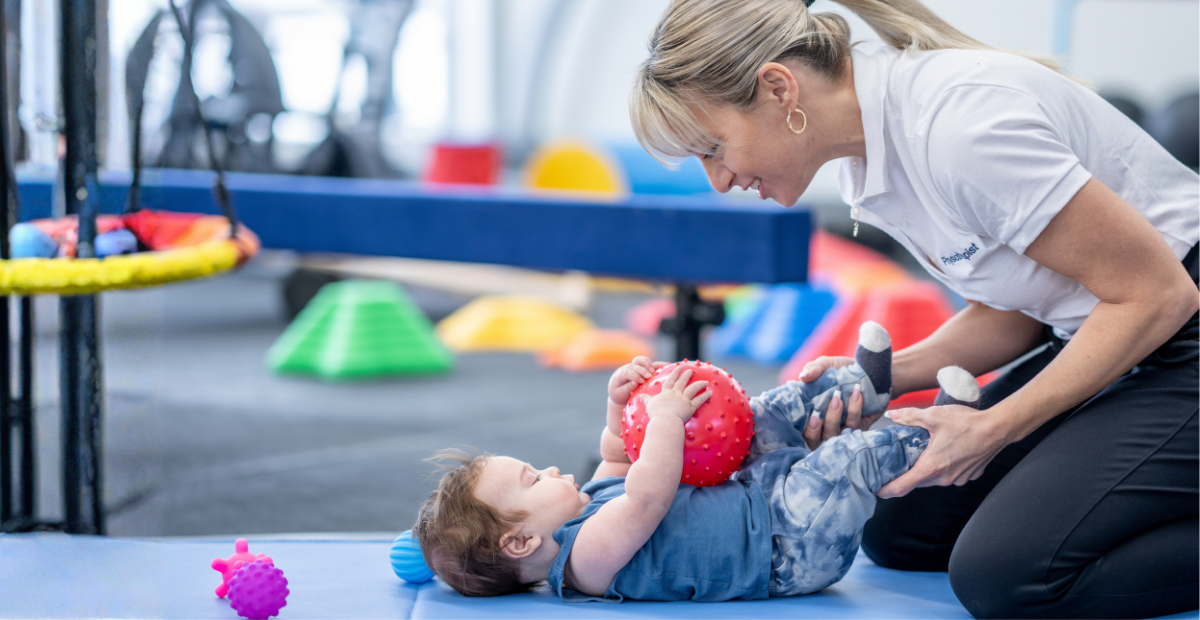
Physical therapy for young children focuses on gross motor skills, the big movements a child uses to explore the world. Rolling, sitting, crawling, walking, climbing. A pediatric physical therapist looks at strength, balance, coordination, muscle tone, and posture, then builds play-based activities that help a child move with more control and confidence.
Many children with disabilities benefit. Children with Down syndrome often have low muscle tone, which can slow sitting and walking. Cerebral palsy, which the CDC calls the most common motor disability in childhood, affects movement and posture. Other children simply reach motor milestones later than expected. Most children walk on their own by about 18 months. If your child isn’t walking yet, seems unusually stiff or floppy, or favors one side of the body, it’s worth asking about.
How Physical Therapy Works in Early Intervention
In Trudeau’s Early Intervention program, physical therapists are part of a team that includes occupational and speech therapists, educators, nurses, social workers, and service coordinators. Together, they serve children from birth to age three.
Sessions happen where children live and play: the living room floor, the backyard, the childcare classroom. Our physical therapists use a coaching model. A therapist might show a parent how to position a baby for tummy time, how to turn the stairs into practice, or how to offer just enough support on a walk to the mailbox.
“A physical therapist might see a child for an hour a week, but caregivers are with their child for the other 167 hours,” says Jacqueline Ferreira, Director of Early Intervention at the Trudeau Center. “We coach parents to turn everyday moments into practice, like climbing onto the couch or reaching for a toy. That’s where the real progress happens.”
Early Intervention services come at no cost to families, and Rhode Island law requires insurance carriers to cover them.
Carrying Movement Goals Home After Age Three
Trudeau’s Home and Center-Based Children’s Services support children and teens ages 3 to 21 at home, at our Warwick center, and out in the community. Our staff work with families and a child’s therapy team so movement goals show up in daily routines, from getting into the car to joining siblings at the playground.
“Movement is how young children learn,” says Andre Bessette, Ph.D., Vice President of Children’s Services at the Trudeau Center. “When a child can sit up to play, crawl to a brother or sister, or walk into a classroom next to friends, or simply explore their surroundings, it really opens up their world to learning, communication, and friendship. Physical therapy can accelerate and facilitate that access for kids.”
Fall Activities That Build Motor Skills
Try these seasonal ideas, with your therapist’s OK:
- Leaf piles: Stepping in, crawling through, and climbing out build balance and core strength.
- Pumpkin patch: Walking on uneven ground is great balance practice. Let your child carry a small pumpkin with both hands.
- Halloween costumes: Choose outfits that allow free movement, without long hems that trip little feet. For children who use walkers or wheelchairs, design the costume around the equipment.
- Porch steps: Offer a hand to hold and let your child lead.
Pediatric Physical Therapists: Join Our Team
Are you a physical therapist who is looking to make a difference in a child’s life and work a few hours a week? Trudeau Early Intervention is looking for Physical Therapist Contractor who has flexible availability to meet the needs of our families. Explore open positions today >
Have Questions About Your Child’s Movement?
If you’ve noticed your child isn’t sitting, crawling, or walking on the timeline you expected, trust that instinct. Call Trudeau’s Early Intervention program at (401) 823-1731. Since 1964, the Trudeau Center has helped Rhode Island families give their children the strongest possible start.
AI may have been used in the initial drafting and research of this article. The information provided is for educational purposes only and is not intended to be, nor should it be interpreted as, medical, therapeutic, legal, or individualized service advice. Every person’s needs and circumstances are unique. For information about services specific to you or your loved one, please contact the Trudeau Center.